Understanding Modern Furnace Installation Requirements
Installing a new furnace represents one of the most significant investments in your home’s comfort and efficiency. At Harris Services, we’ve spent over 20 years helping our customers stay comfortable through expert furnace installations that prioritize both immediate performance and long-term reliability. The process involves much more than simply swapping out old equipment for new. Proper sizing calculations, ductwork evaluation, ventilation requirements, and local building codes all play crucial roles in determining the success of your installation. We service all makes and models, ensuring that regardless of your current system or preferred brand, our technicians have the expertise to deliver exceptional results.
The heating industry has evolved significantly over recent decades, with modern furnaces achieving efficiency ratings of up to 98.5% AFUE (Annual Fuel Utilization Efficiency), compared to older models that often operate at 56-70% efficiency. This dramatic improvement means that homeowners throughout Helena, Pelham, Alabaster, AL, and the surrounding areas can reduce their heating costs by 30-45% simply by upgrading to a properly installed high-efficiency system. As an authorized dealer of Carrier, we have access to cutting-edge technology that maximizes both comfort and energy savings. Our installation process ensures that every component works harmoniously to deliver the manufacturer’s promised efficiency ratings.
The Technical Installation Process
Every successful furnace installation begins with a comprehensive home evaluation that examines existing ductwork, insulation levels, window quality, and overall thermal envelope performance. We perform detailed Manual J load calculations to determine the exact heating capacity your home requires, preventing the common mistake of oversizing that leads to short cycling, increased wear, and uncomfortable temperature swings. This calculation considers factors including square footage, ceiling height, sun exposure, and the number of occupants to ensure optimal equipment selection.
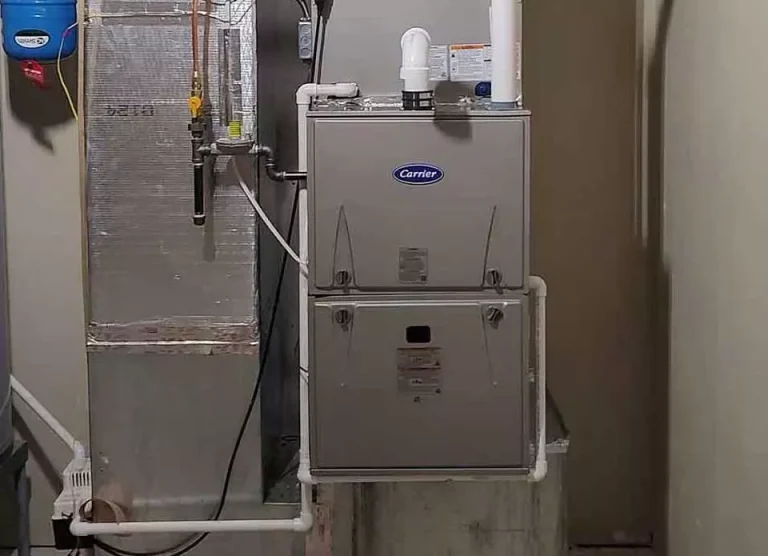
The physical installation involves multiple critical steps that require precision and expertise. First, we carefully remove your old furnace while protecting your home from dust and debris. The new unit placement must account for proper clearances, combustion air requirements, and accessibility for future maintenance. We meticulously connect gas lines, ensuring all joints are properly sealed and tested for leaks using electronic detection equipment. Electrical connections must meet National Electrical Code standards, including proper grounding and circuit protection. The venting system requires particular attention, as improper installation can lead to dangerous carbon monoxide buildup or premature equipment failure due to condensation damage.
Essential Components and Considerations
Modern furnace installations incorporate several advanced components that enhance performance and longevity. Variable-speed blower motors adjust airflow automatically, maintaining consistent temperatures while reducing energy consumption by up to 75% compared to single-speed models. Two-stage or modulating gas valves allow the furnace to operate at lower capacities during mild weather, improving comfort and efficiency. We offer 24/7 emergency service because we understand that heating failures don’t follow business hours, and our fast, dependable, honest, quality service ensures you’re never left in the cold.
The integration of smart thermostats has revolutionized furnace operation, with programmable and learning models reducing heating costs by 10-23% through intelligent scheduling and occupancy detection. During installation, we ensure proper thermostat placement away from heat sources, drafts, and direct sunlight that could cause false readings. We also configure advanced features like adaptive recovery, which learns how long your system takes to reach desired temperatures and adjusts start times accordingly.
Installation Best Practices and Quality Assurance
Professional installation standards distinguish quality contractors from inexperienced installers who might offer lower prices but deliver substandard results. Key installation requirements include:
- Proper ductwork sealing: addressing leaks that waste 20-30% of heated air in typical homes
- Correct refrigerant charge: for heat pump systems to achieve rated efficiency
- Combustion analysis: verifying optimal fuel-air mixture for maximum efficiency and safety
Post-installation testing verifies that your new furnace operates within manufacturer specifications. We measure temperature rise across the heat exchanger, check static pressure in the ductwork, and confirm proper ventilation rates. Carbon monoxide testing ensures combustion safety, while infrared thermography can identify any heat loss points requiring additional attention. This thorough commissioning process, combined with our extensive experience, guarantees your furnace installation delivers promised comfort and efficiency throughout Helena, Pelham, Alabaster, Bessemer, Indian Springs Village, & Hoover, AL for years to come.