Understanding Radiant Floor Heating Systems
The technology behind radiant floor heating has evolved significantly over the past several decades, and we’ve been at the forefront of these advancements with over 20 years of experience helping our customers stay comfortable. Modern systems utilize either electric resistance cables or hydronic tubing that circulates heated water beneath your flooring surface. The floor essentially becomes a large, low-temperature radiator that efficiently distributes heat throughout your living space. This method of heat distribution eliminates the need for ductwork, reduces allergen circulation, and operates silently while maintaining optimal humidity levels in your home.
Types of Radiant Floor Heating We Install
Electric radiant floor heating systems consist of heating cables or mats installed beneath your flooring material. These systems work exceptionally well for smaller areas like bathrooms, kitchens, or sunrooms where you want targeted warmth. The electric cables generate heat when electricity passes through them, and we typically embed them in thin-set mortar beneath tile or stone flooring. Electric systems heat up quickly, usually reaching optimal temperature within 30 to 60 minutes, making them ideal for spaces you use intermittently. We install programmable thermostats with these systems, allowing you to schedule heating cycles that align with your daily routine and maximize energy efficiency.
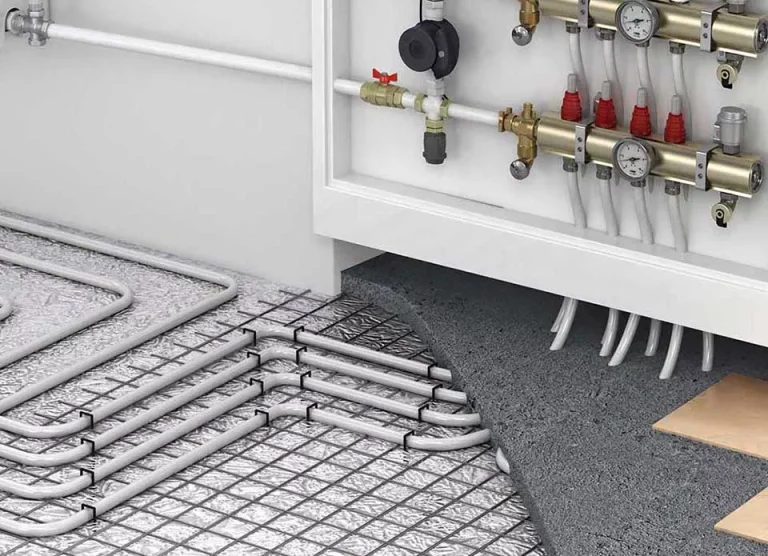
Hydronic radiant floor heating systems circulate heated water through specialized PEX tubing installed beneath your floors. These systems connect to a boiler, water heater, or dedicated heating unit that maintains water temperature between 85 and 140 degrees Fahrenheit, depending on your heating requirements and outdoor temperatures. Hydronic systems excel in whole-house applications and larger commercial spaces because water transfers heat more efficiently than electricity. We often recommend hydronic systems for new construction projects or major renovations where we can properly design the system layout and ensure adequate insulation beneath the tubing. As an authorized dealer of Carrier, we can integrate these systems with high-efficiency boilers and heat pumps that further reduce your energy consumption.
Installation Process and Technical Considerations
Installing radiant floor heating requires careful planning and precise execution to ensure optimal performance and longevity. We begin every project with a comprehensive heat load calculation that considers your building’s insulation values, window specifications, ceiling heights, and local climate data. This analysis determines the required heating capacity and helps us design a system layout that provides uniform heat distribution without hot spots or cold zones. For hydronic systems, we calculate tube spacing, loop lengths, and flow rates to maintain consistent temperatures across all heated areas while minimizing pump energy consumption.
The installation process varies depending on your existing floor structure and the type of system you choose. For new construction or gut renovations, we can install radiant heating in concrete slabs, incorporating insulation boards beneath the tubing to direct heat upward into living spaces rather than losing it to the ground below. In existing homes, we often use above-floor installation methods, running tubing or cables between floor joists or installing low-profile systems directly over existing subfloors. We work fast and are very trustworthy, ensuring minimal disruption to your daily routine while maintaining the highest installation standards.
Benefits and Energy Efficiency
Radiant floor heating offers numerous advantages that make it an increasingly popular choice throughout Helena, Pelham, Alabaster, AL, and the surrounding areas. The system operates at lower temperatures than conventional heating methods while providing superior comfort, typically reducing energy consumption by 25 to 30 percent compared to forced-air systems. This efficiency stems from several factors:
- Reduced heat stratification: warm air naturally rises, but radiant heat warms objects and people directly
- Lower operating temperatures: radiant systems feel comfortable at lower air temperatures
- Zoned heating capability: heat only occupied spaces rather than entire buildings
- Minimal heat loss: no ductwork means no air leakage or thermal losses through ducts
- Compatible with renewable energy: works efficiently with solar thermal and geothermal systems